Why momentum is your strongest portfolio asset
There used to be this unsaid assumption that the students who produced those intensely detailed illustrations, worldbuilding around their architecture projects, and studied at the most prestigious architecture school in the world (you know the one) would be hired immedietly. For years, online discourse has tried to dissect these drawings to understand what is it about them that actually impresses people. Whether or not this translates to a higher employability rate, we can’t say for sure. But extravagent drawings need not be the only portfolio asset you have. In fact, there’s a much simpler and overlooked asset you are ignoring: momentum.
The reason why I say this is an asset is because I view momentum as having the same importance as the projects or drawings or images you put in your portfolio. We often obsess for far too long over which image of the technical model to include - often resulting in putting both in which is another problem for another time - and miss out on cruical opportunities in the name of ‘developing a portfolio of work’. Ironically, this is something you’re already doing each year in architecture school. Whilst a job-seeking portfolio is a lot more condensed and concise, the same rules apply, but these usually go out the window as people view them as an entirely new project.
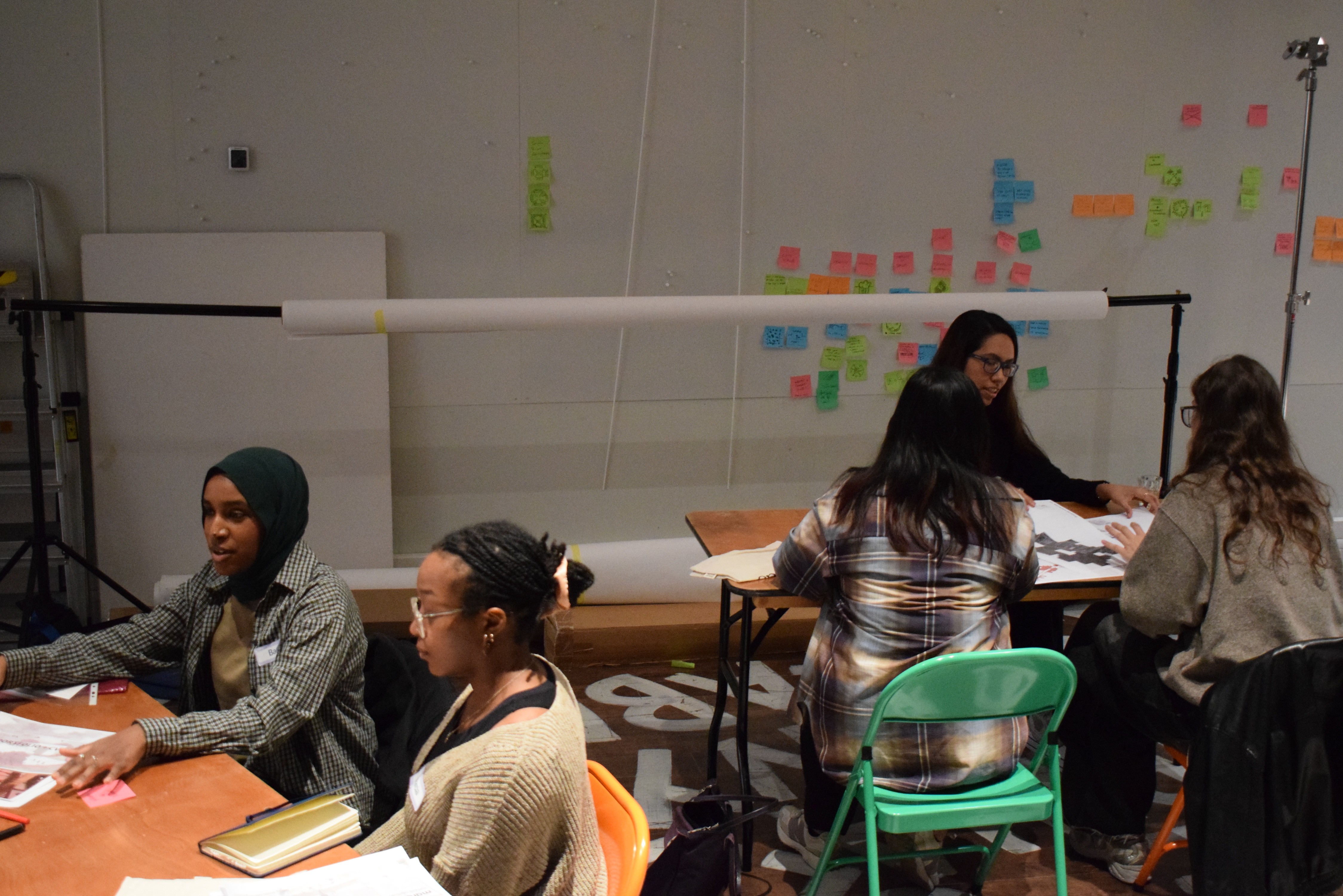
Take it from someone who spent over 12 months giving 10 interviews and improving my portfolio 10 different times: momentum is where you’re lacking. The majority of attendees who come to Open Studios aren’t unprepared or indecisive. In fact, they have well thought out portfolios with pretty good work. What they are lacking is the confidence in their work (and by extension themselves) and a strategy to build momentum when applying to practices.
What I mean by momentum
Momentum by definition is ‘the quantity of motion of a moving body, measured as a product of its mass and velocity’. However, since we are not physicists, I’d like to point you towards the definition of momentum as described by authors and thought leaders in the self-development / productivity space. They often describe momentum as the "snowball effect"—where small, initial actions gather speed and lead to greater, more effortless achievements. Later we’ll talk about the process of iteration and how this is slightly different but in the same vein.
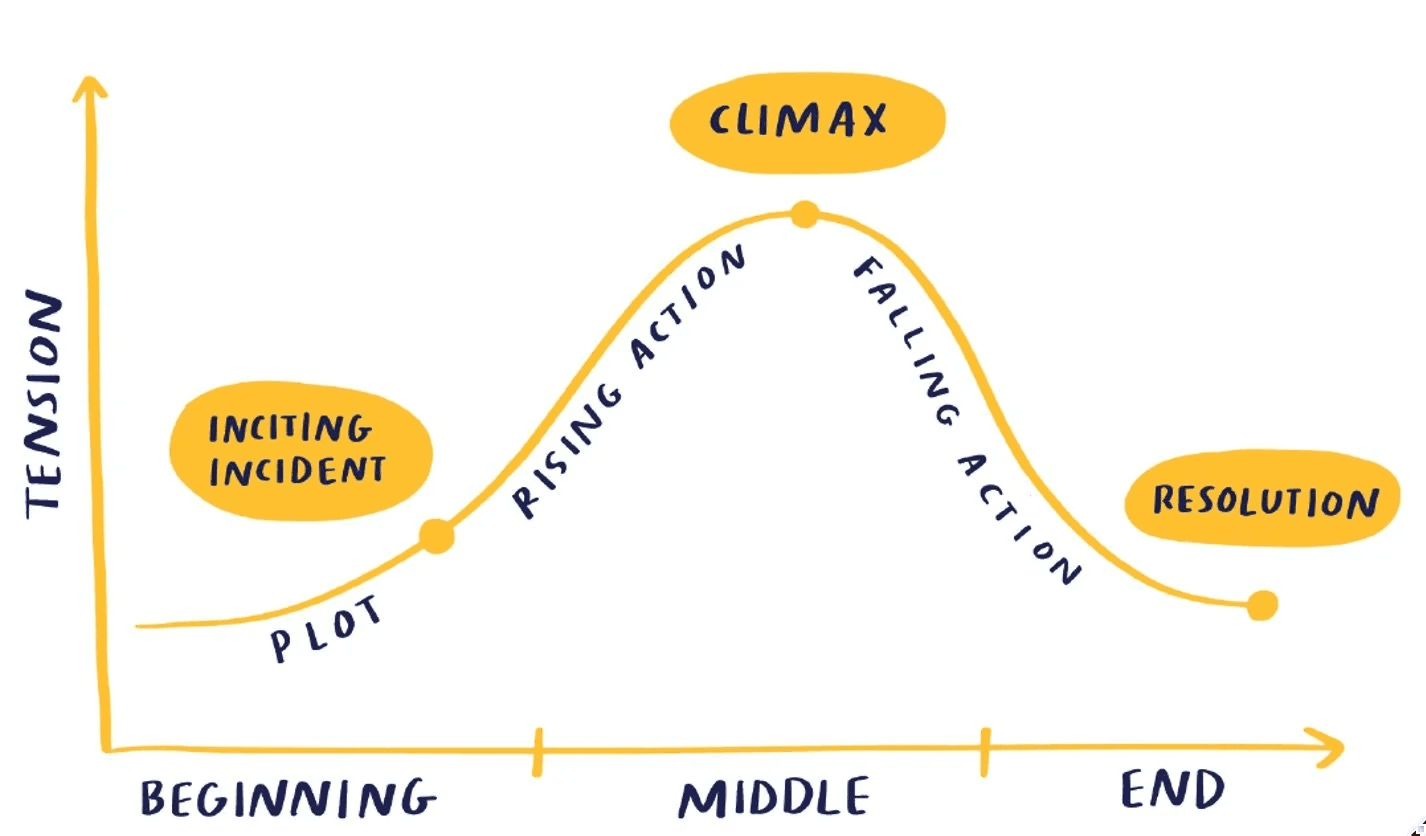
Having a sense of momentum in your portfolio is just like a classic storytelling arc. There’s a beginning, middle and end. Usually, that middle is called the climax which you build up towards through all kinds of techniques. Momentum can be the same in each of your portfolio projects. You start with the inciting incident or a problem you’re looking to solve. You reach a climax of sorts by talking about a methodology you’ve implemented, a theory that has unlocked something or a material you ended up creating. If you use momentum as a storytelling device, each project becomes this fantastical story that is far more interesting than a set of actions you took over the course of the academic year.
What makes momentum effortless as a storytelling device is that it does all the work for you without having to explicitly say it. You don’t have to describe each technical drawing by the layers in a foundation detail, you can simply frame it as a story that builds up to a revelation later on. It’s also not a crime to talk about things that didn’t work. Each hero has a defining moment where they are knocked down or put at a disadvantage. Most people don’t care about the issue itself, but they are impressed with how that hero gets back up. Similarly, momentum can look like being able to identify those problems and then showing how you overcame them. Before you know it, you’ve demonstrated problem-solving skills and still held their interest.
Iteration
If momentum is the speed at which your efforts gather together, then iteration is the small changes you make along the way that compound over time. Last year there were a number of standout individuals who came to more than 3 Open Studios. Initially, I was confused because the had been given advice from some great architects working at renowned practices. Surely they had enough advice at this stage? But it wasn’t about just gaining advice. Each time they came to present their portfolio, they had implemented previous advice.
This can look as small as making a drawing bigger or tweaking font sizes for printed portfolios. Each change that you make helps to improve your work and makes a big difference for the next time you apply to a practice. I kept several iterations of my portfolio and CV because in between the lulls of jobs being advertised, I was using my time to learn new skills and implement them in my portfolio. The first portfolio you design likely won’t be the best. But that’s the point! Momentum can also be a part of your attitude. If you feel like you’ve nailed your portfolio on the first try, then don’t hear back from practices, you’re missing out on the opportunity to gain feedback and iterate.
This is exactly the kind of feedback loop we’re used to at university. Presenting our ideas weekly with our tutors and building and developing as we go. Once you graduate, you lose access to that feedback loop and the distance between university and practice grows larger. Therefore, whilst these individuals were improving their momentum by practicing how to talk about their work, telling a story or even just learning about new practices, they were also iterating each time.
Ship things often
This is extremely important because the two go hand in hand. As I mentioned earlier, a lot of graduates will often sit on their portfolios before sending anything out. To me, that’s the difference between your portfolio getting past all the stages and going completely unnoticed. With there being no real ‘hiring season’ why not put yourself at an advantage by sending out your portfolio as early as you can. You do not have to wait to finish your final project to apply for a job. In fact, I think employers would be even more intrigued - just like an unfinished story - to see how your project currently sits and the works in progress like sketches or models.
There’s a concept in the tech or productivity space which I believe started with online writing called ‘shipping’. It’s this idea that you publish your written work or content as often as possible, without putting too much pressure on the quality of the work. For creatives like us, it helps to get comfortable with the notion that not everything has to be perfect on the first try. It’s also a bit like vibe-coding where the point of experimenting is the fun bit, not having a ready-to-go product or app. So when you pair together momentum and iteration, it becomes this powerful tool that lets you ship things often and try new stuff.
Say you see a slightly off-centre role for a Part 1 who also has a background or experience with social media. You could tweak your portfolio to include a page that showcases your art-business and how you’ve marketed it through social media. This version doesn’t have to then carry through to the next jobs you apply to either, but it can be a good experiment.
Momentum can obviously take time to build up, but I believe it can be a rewarding process that benefits you in the long term (hopefully there won’t be a long-term though!).